Logical
Logical
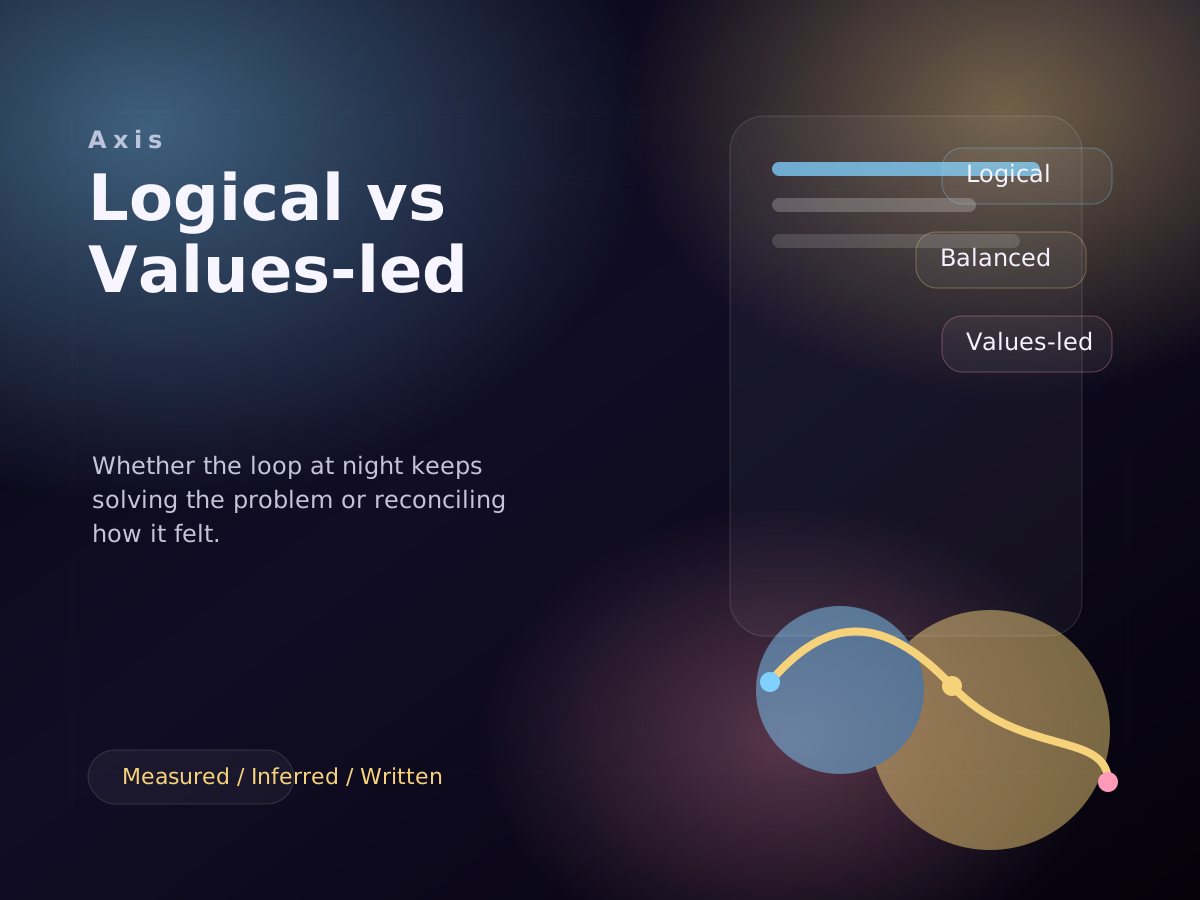
Logical decision-making usually starts by asking what holds up. It sorts the facts, spots weak reasoning quickly, and feels calmer once the situation has shape.
Night effect: The mind may keep fixing, editing, correcting, or searching for the cleanest version of a decision after the day is over.
How Aftercurrent uses it: Aftercurrent uses this axis to tell whether a rough night started with an unsolved problem, an unfinished decision, or logic being used where feeling still needed a place.
Balanced
Balanced
Balanced here means reason and humanity can stay in the same room. It is strong, but it can also create fatigue when the cleanest answer and the kindest answer diverge.
Night effect: You usually sleep best when both the logic and the feeling have been named. If one stays hidden, the loop reopens later.
How Aftercurrent uses it: Aftercurrent uses this axis to show whether sleep loss is about facts, feelings, or the strain of carrying both.
Values-led
Values-led
Values-led judgment starts with what feels right, fair, or trustworthy enough to live with. Tone, relational impact, and moral fit arrive early.
Night effect: A tense exchange, guilt, unfairness, or the sense that something landed wrong can keep echoing long after the event itself is over.
How Aftercurrent uses it: Aftercurrent uses this axis to track emotional residue, repair, and the choices that made sense on paper but did not sit right afterward.